
Borrowing money from overseas has become an important financing option for businesses in India. The Reserve Bank of India has now introduced changes that could make this process simpler and more flexible for eligible borrowers. On 16 February 2026 the RBI amended the Foreign Exchange Management (Borrowing and Lending) Regulations, 2018 and the Master Directions covering External Commercial Borrowings, Trade Credits and Structured Obligations. The revised framework has come into effect immediately.
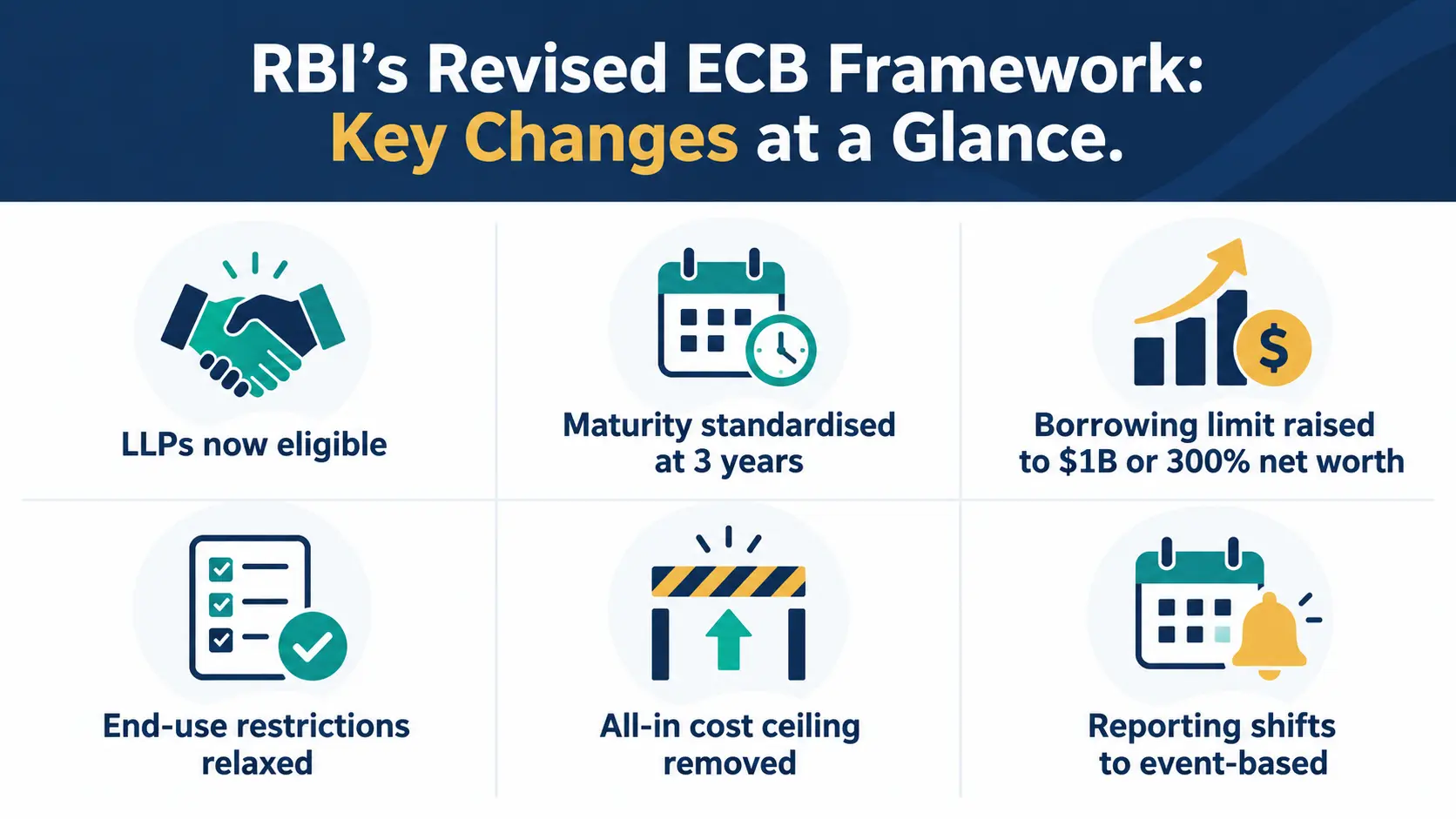
The changes are aimed at making the ECB framework easier to navigate while giving businesses greater flexibility in how they raise and use overseas funds. The revised framework simplifies eligibility requirements, brings greater consistency to the minimum average maturity period, relaxes certain end use restrictions and provides more flexibility around interest costs. At the same time, the RBI has strengthened reporting and compliance requirements, making it important for borrowers to understand not only the new opportunities but also their responsibilities.
Existing ECBs Will Continue Under the Earlier Rules
For businesses that have already raised ECBs, the revised framework does not mean that their existing borrowings will suddenly move to the new regime. ECBs availed before the amendment will continue to be governed by the earlier framework. The key exception is reporting, which will now follow the requirements under the revised framework. This provides continuity for existing borrowers while bringing their reporting obligations in line with the new rules.
LLPs Can Now Raise ECBs
One of the notable changes is the inclusion of Limited Liability Partnerships as eligible borrowers. LLPs can now raise External Commercial Borrowings, giving them access to an additional source of overseas financing. This expands the range of entities that can make use of the ECB route under the revised framework.
A Standard Three-Year Maturity Period
The minimum average maturity period has also been made simpler. Earlier, the required maturity could range from three years to ten years depending on how the borrowed funds were intended to be used. The revised framework now standardises the minimum average maturity period at three years. For borrowers, this creates a more straightforward framework when planning the tenure of an ECB.
Businesses Can Get More Borrowing
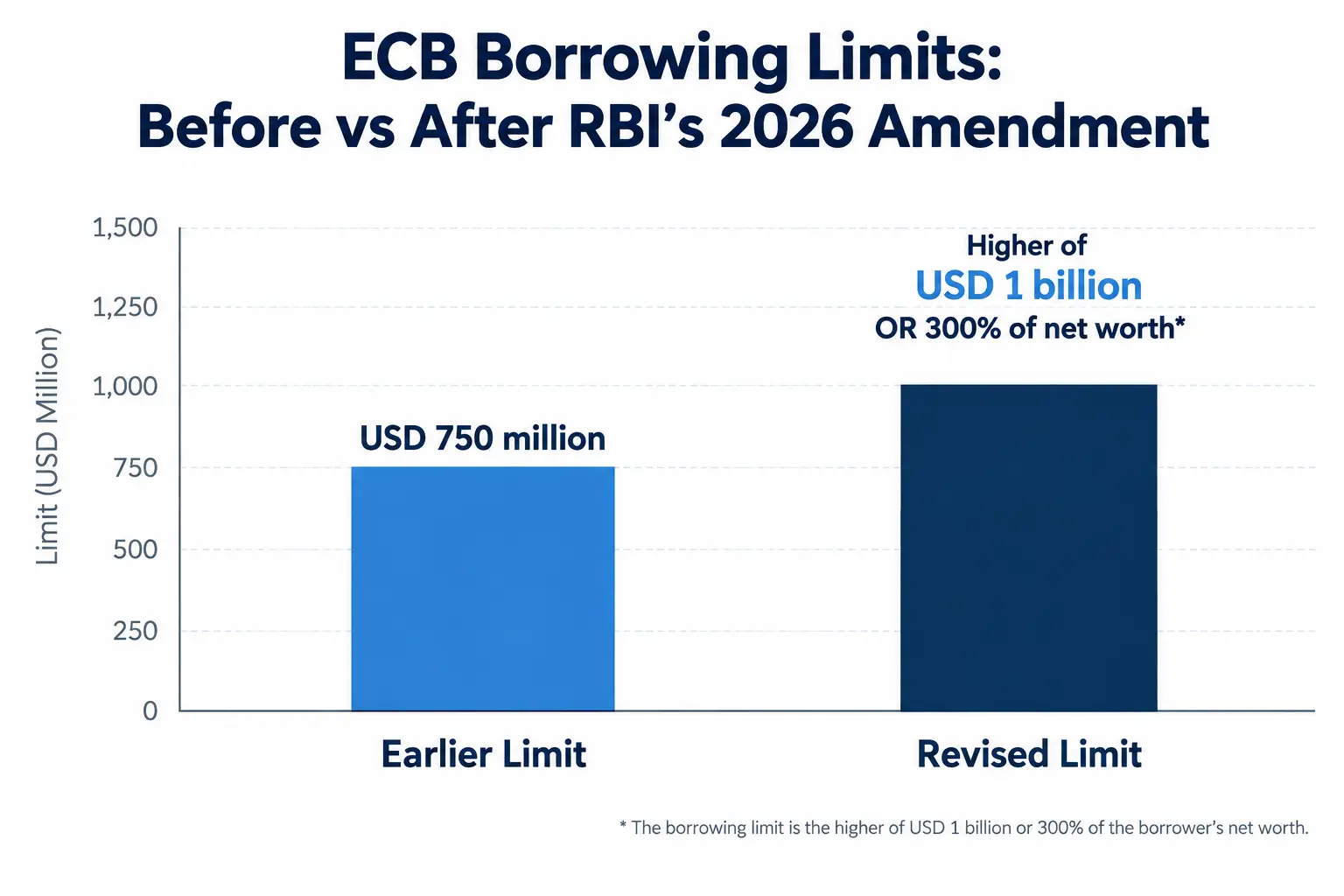
The revised framework also increases the borrowing limit available to eligible borrowers. The earlier limit of USD 750 million has been replaced by the higher of USD 1 billion outstanding or 300 percent of the borrower's standalone net worth. For eligible borrowers regulated by financial sector regulators, ECB limits will not apply. This is another important change that provides greater flexibility to borrowers operating within the regulated financial sector.
More Flexibility in How ECB Funds Can Be Used
The RBI has also relaxed some of the earlier restrictions around the end use of ECB proceeds. Indian entities involved in construction development can now raise ECBs, subject to the condition that plots can be sold only after completion of trunk infrastructure. For entities developing industrial parks, ECBs are subject to prescribed requirements relating to the minimum number of units and allocable area.
The restrictions around real estate businesses have also been relaxed in certain areas. The revised framework covers activities such as infrastructure activities, specified own use acquisitions and real estate broking services. This provides eligible businesses with greater flexibility in accessing overseas borrowing for these specified activities.
Another useful change relates to strategic corporate transactions. ECB proceeds can be used for transactions in securities when these transactions form part of specified corporate actions such as a merger, demerger, amalgamation, arrangement or acquisition of control. These transactions must continue to comply with the applicable regulatory framework, including the Companies Act, 2013, relevant SEBI regulations, the Securitization and Reconstruction of Financial Assets and Enforcement of Security Interest Act, 2002 and the Insolvency and Bankruptcy Code, 2016.
The All In Cost Ceiling Has Been Removed
The revised framework has also removed the earlier all in cost ceiling. Going forward, the all in cost should be based on prevailing market conditions and should be at arm's length where related parties are involved. This moves the framework towards a more market aligned approach to the cost of overseas borrowing.
What Happens to ECB Funds Before They Are Used?
The revised framework provides flexibility for temporarily parking ECB proceeds before they are needed. When the funds are intended for INR expenditure, the proceeds must be credited to an INR account by the end of the succeeding month from the date of receipt. Until they are used, the funds can be invested in an unencumbered fixed deposit with the designated Authorized Dealer Category I bank for up to one year.
Where the funds are intended for foreign currency expenditure, the proceeds can be kept in a foreign currency account in India or abroad, where permitted. They can also be temporarily invested outside India in an unencumbered fixed deposit or debt instrument with an original maturity of up to one year.
Reporting Becomes Event Based
Reporting is another area where borrowers will notice a clear change. Earlier, Form ECB 2 had to be filed every month. Under the revised framework, the filing is now event based. This means the form needs to be submitted when ECB proceeds are utilised or when debt servicing is undertaken. The filing must be completed within seven calendar days from the end of the month in which the relevant event takes place.
This makes the reporting requirement more closely connected to actual activity under the ECB. However, borrowers will still need to keep track of utilisation and debt servicing events carefully so that the revised filing timelines are met.
Compliance Remains Important
While the new framework offers greater flexibility, it also places importance on maintaining proper reporting and communication. A borrower may be classified as untraceable if, after drawdown, it fails to file specified returns for four consecutive quarters, the designated Authorised Dealer bank has made multiple unsuccessful attempts to contact the borrower and there is no operation at the registered office. In such a situation, the borrower may be classified as untraceable and notified to the RBI and the Directorate of Enforcement.
A More Flexible ECB Framework for Businesses
Overall, the revised ECB framework marks a move towards simplifying cross border borrowing in India while giving compliant borrowers greater operational flexibility. The inclusion of LLPs, the standardisation of the minimum average maturity period, higher borrowing limits, relaxation of certain end use conditions and removal of the all in cost ceiling are some of the key changes that businesses will need to understand.
The changes also show a move towards a more market aligned approach. The exclusion of certain FVCI linked debt instruments, the flexibility provided for restructuring related transactions and the shift towards market based interest costs are intended to support genuine borrowing requirements. At the same time, the revised reporting and compliance requirements mean that borrowers must continue to maintain proper processes and documentation.
Businesses Can Get More Borrowing
For businesses looking at overseas borrowing, the revised framework provides a wider range of possibilities than before. The extent to which these changes benefit a particular borrower will still depend on factors such as global liquidity conditions, investor risk appetite, the borrower's credit profile and the readiness of its documentation. For this reason, understanding the revised provisions and planning the borrowing structure carefully will remain important for businesses seeking to make the most of the new ECB framework.