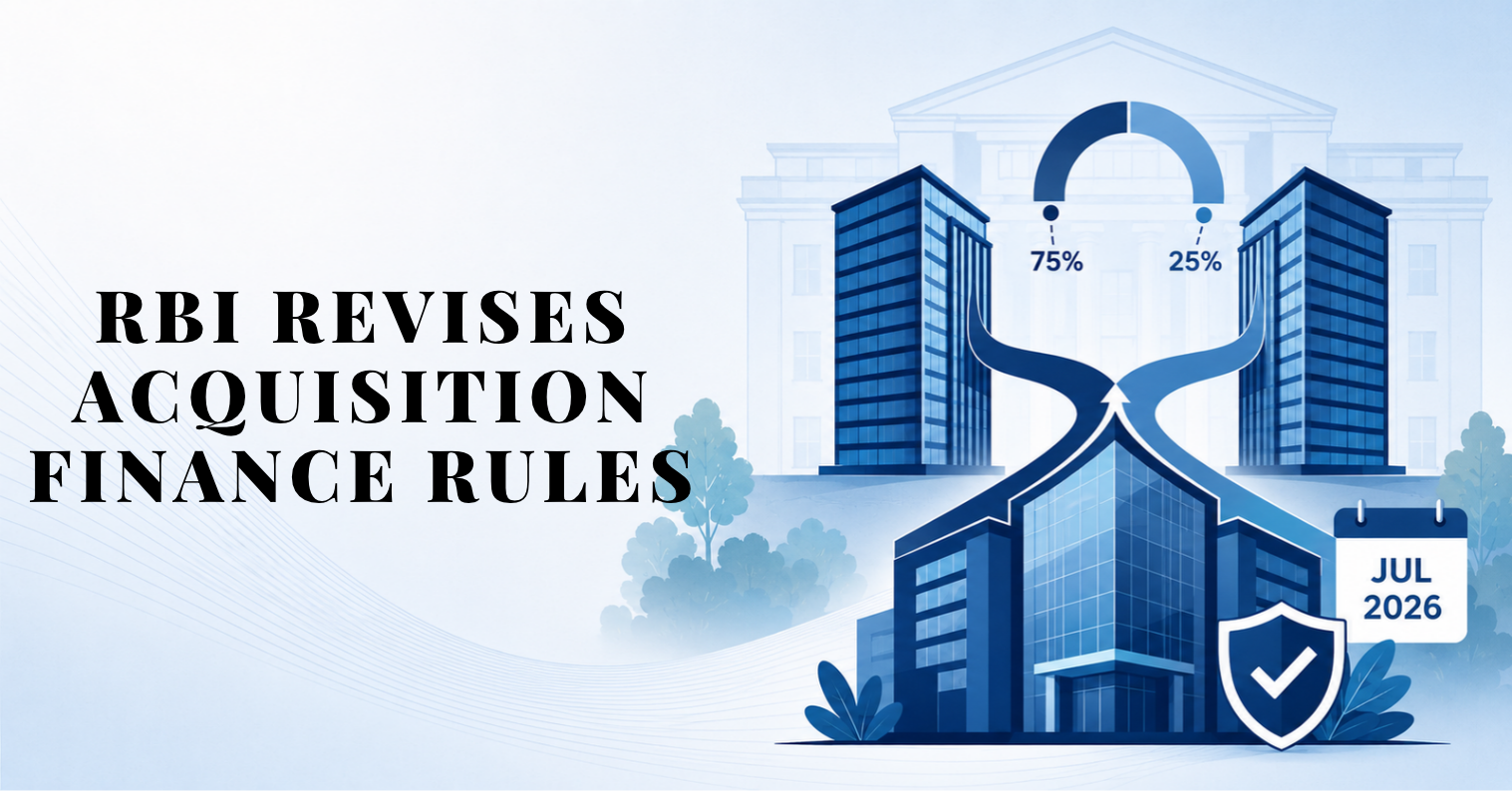

At its 57th meeting on 8 October 2026, the GST Council recommended removing the condition that prevents services supplied between establishments of the same person from qualifying as exports. The proposed change could affect Indian IT companies serving overseas clients through their own branches—and could also make an Indian branch office a more attractive option for foreign companies entering India. The recommendation should not be treated as effective until the required amendment and effective-date notification are confirmed.
What Is Export of Services Under GST?
Section 2(6) of the Integrated Goods and Services Tax (IGST) Act, 2017 sets out five conditions for a service to qualify as an export. These include the supplier being located in India, the recipient being outside India, the place of supply being outside India, receipt of payment in convertible foreign exchange or Indian rupees where permitted by the RBI, and—under the existing framework—the supplier and recipient not being merely establishments of a distinct person.
The last condition is central to the issue addressed by the GST Council’s recommendation. Whether a particular service qualifies as an export still depends on the law in force and satisfaction of the remaining conditions.
Conditions for Export of Services Under GST
Under Explanation 1 to Section 8 of the IGST Act, an Indian branch and its foreign head office may be treated as establishments of the same person. CBIC Circular 161/17/2021-GST explained the consequence under the existing framework: services supplied by an Indian branch to its overseas head office were not treated as exports in the circumstances covered by the circular.
The specific conditions to review are:
- Supplier located in India.
- Recipient located outside India.
- Place of supply outside India, applying the rules relevant to the service.
- Payment received in convertible foreign exchange or in Indian rupees where permitted by the RBI.
- The applicable legal treatment of establishments of the same person, including any amendment and effective date.
How the GST Rule Change Could Affect Foreign Company Branches in India
The issue has two sides. For Indian businesses operating overseas branches, the recommendation could affect services supplied between their establishments. For foreign companies with Indian operations, it could change the GST comparison between operating through a branch and using a separately incorporated subsidiary.
Under the existing treatment described in CBIC Circular 161/17/2021-GST, an Indian subsidiary serving its foreign parent could qualify as exporting services because the two are separate legal entities, subject to the applicable conditions. The original article contrasts this with a branch, which could face an 18% IGST cost on services supplied to its own head office where the tax credit could not be claimed elsewhere.
A subsidiary could supply eligible services under a Letter of Undertaking (LUT) without payment of IGST and claim refunds of eligible input tax credit, subject to the applicable requirements. The branch-versus-subsidiary comparison should therefore be evaluated against the actual transaction and legal provisions.
Why This Could Matter for IT, R&D and Engineering Businesses
The potential change is especially relevant to captive R&D and engineering centres, project and branch offices already in India that have been absorbing 18% GST on internal charges, and mid-sized foreign companies testing India before committing to a full Global Capability Centre (GCC). Relevant activities may include software development, testing, engineering and research services supplied to overseas establishments.
If the amendment takes effect and the remaining export conditions are satisfied, eligible services supplied by an Indian branch to its head office or sister branches abroad could qualify as zero-rated exports. Businesses should not apply that treatment before confirming the operative law.
Indian Branch vs Subsidiary: GST and Other Tax Considerations
GST is only one factor in the structure decision. The original comparison also considers approvals, permitted activities, income tax, profit repatriation and compliance.
| Factor | Branch office | Wholly owned subsidiary |
|---|---|---|
| GST on services to foreign group | Could qualify as zero-rated exports if the amendment takes effect and conditions are met | May qualify as exports if applicable conditions are met |
| Setup approval | RBI / authorised dealer bank approval under FEMA, as applicable | Automatic route for many IT/R&D sectors, subject to applicable sectoral rules |
| Permitted activities | Restricted to activities permitted under the relevant approval and regulatory framework | Generally broader, subject to Indian law and sector-specific restrictions |
| Income tax rates cited in the original draft | 35% plus surcharge and cess | 22% concessional regime; approximately 25.17% effective |
| Profit repatriation | Branch profit remitted subject to applicable tax and remittance rules | Dividends taxed under applicable rules |
| Compliance | No separate company board or Indian AGM as a company, subject to applicable branch requirements | Companies Act compliance, including applicable board and AGM requirements |
A branch may be simpler to run and wind down, while a subsidiary may offer broader flexibility. The appropriate choice depends on the business model and the applicable legal and tax requirements.
What Foreign Companies Should Do Next
1. Map intra-group service flows
Identify services supplied between the Indian branch and overseas offices and quantify the GST currently paid on those transactions.
2. Prepare for an LUT
Prepare the relevant process so eligible exports can be made without payment of IGST if and when the amendment becomes effective and the requirements are met.
3. Check export conditions and documentation
Review place of supply, foreign-exchange receipt, service agreements, invoices and supporting records.
4. Revisit the entry structure
Recalculate the branch-versus-subsidiary decision, including regulatory approvals, permitted activities, tax rates and compliance.
5. Review transfer pricing
Review transfer-pricing treatment and cost-plus charges to the head office; do not assume the amounts become export turnover until the amended law and facts support that treatment.
Conclusion
The GST Council’s recommendation targets a specific restriction affecting services between establishments of the same person. If the required amendment takes effect, it could reduce the GST disadvantage that the original article identifies for certain foreign-company branch structures in India. For businesses assessing an Indian presence, the decision should be based on the final law, the eligibility of the specific services, and a comparison of GST, income tax, regulatory requirements and compliance. Map service flows and quantify the potential 18% IGST impact, but do not change the tax treatment until the amendment and effective date are confirmed.
Frequently Asked Questions
What is export of services under GST?
Section 2(6) of the IGST Act, 2017 sets out the statutory conditions that must be satisfied for a service to qualify as an export.
Can an Indian branch supply services to its overseas head office as exports?
Under the framework described in CBIC Circular 161/17/2021-GST, such services faced a restriction. The GST Council recommended removing the relevant condition; confirm the amendment and effective date before applying the proposed treatment.
Why was 18% IGST a concern for branch offices?
The original article explains that the branch could have to charge 18% IGST to its own head office, with the tax potentially becoming a cost where the credit could not be claimed elsewhere.
Can eligible export services be supplied without payment of IGST?
Eligible zero-rated exports may be supplied under an LUT without payment of IGST, subject to the applicable legal and procedural requirements.
Should a foreign company choose a branch or subsidiary because of GST?
GST should be considered alongside income tax, regulatory approvals, permitted activities, profit repatriation, compliance and the company’s operating model.